

Modern dental technology should do more than make treatment feel high-tech. It should help your doctor understand your oral health more clearly, improve communication, support precise planning, and make your experience more comfortable from the beginning.
At Bella Vista Family Dental, we use advanced diagnostic and digital technology to gather detailed information about your teeth, bite, jaw, facial structure, and surrounding anatomy. These tools allow our team to evaluate concerns from multiple perspectives rather than relying on what can be seen during a traditional visual examination alone.
For patients and families in Simpsonville, SC, this technology supports a more informed approach to dental care. Whether you are visiting us for preventive treatment, restorative dentistry, cosmetic care, orthodontic planning, dental implants, or a more complex procedure, digital information helps us create treatment recommendations based on a clearer understanding of your individual needs.
Digital X-Rays & Detailed Dental Imaging
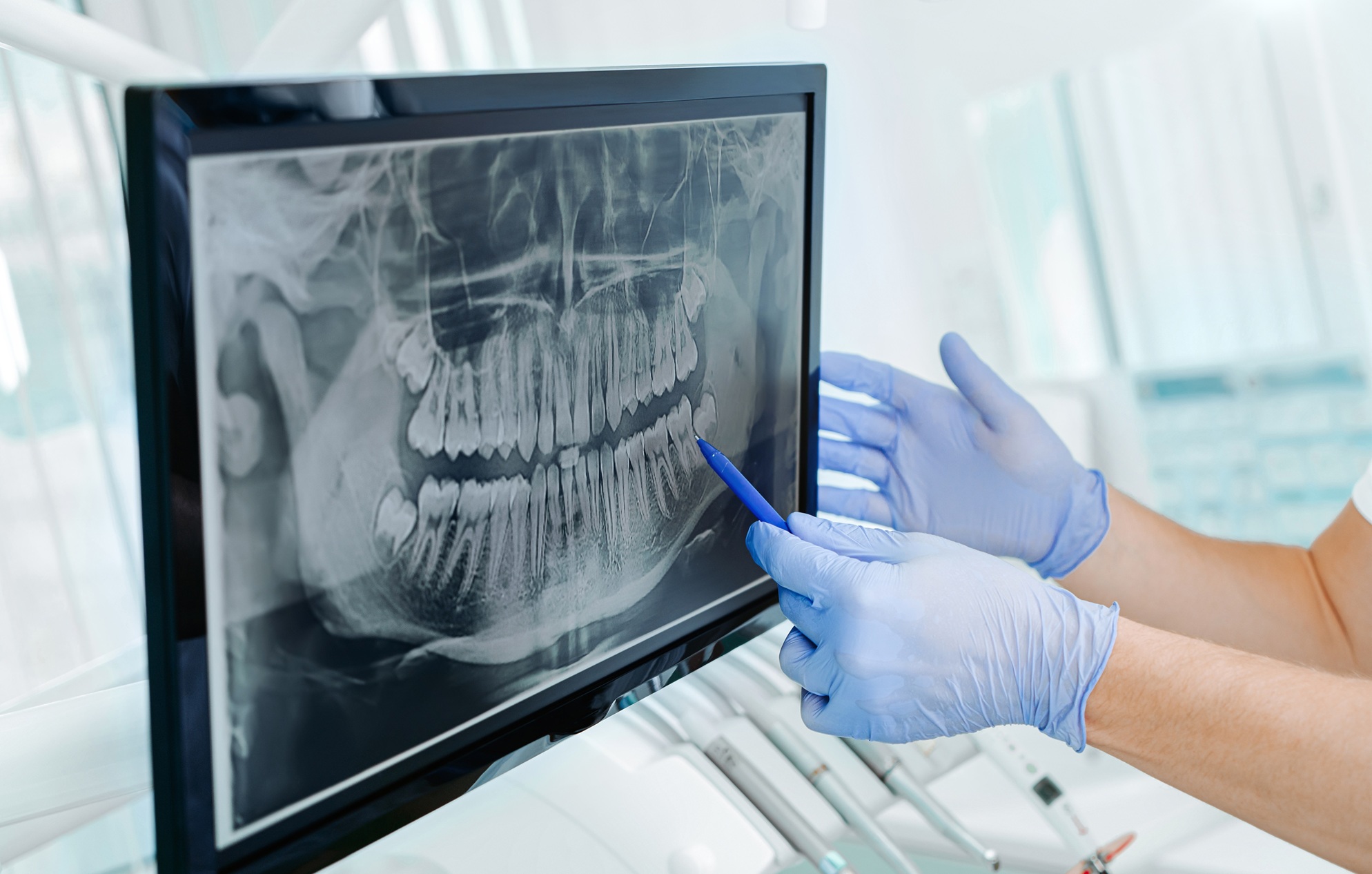
Digital x-rays allow our team to evaluate areas of your mouth that cannot be fully examined with the eye alone. They can reveal information about tooth structure, bone levels, developing decay, previous dental treatment, tooth roots, and other changes beneath the surface.
Unlike traditional film-based imaging, digital x-rays create images that can be viewed almost immediately. Your doctor can enlarge specific areas, adjust the image for closer evaluation, and use the findings alongside your clinical examination.
Digital imaging may help us:
- Identify decay developing between teeth or beneath existing restorations.
- Evaluate bone levels and other signs associated with periodontal health.
- Examine tooth roots and surrounding structures when investigating sensitivity or infection.
- Monitor changes in your oral health over time by comparing current and previous images.
- Explain findings more clearly by allowing you to see the same images your doctor is reviewing.
Being able to share these images directly with you is an important part of our approach. When you can see what we see, conversations about your oral health and treatment options become easier to understand.

Digital Scanners & Comfortable Impressions
Traditional dental impressions can be uncomfortable for some patients, particularly when impression material must remain in the mouth while it sets. Digital scanners offer a different approach by capturing detailed images of the teeth and surrounding tissues to create a three-dimensional digital representation of your smile.
A small handheld scanner is moved around the mouth while specialized software combines the images into a detailed digital model. The process allows our team to examine tooth shape, spacing, alignment, bite relationships, and other important details.
Digital scans can be useful when planning a variety of services, including restorative, cosmetic, and orthodontic treatment. Depending on your needs, these digital records may assist with:
- Planning crowns, bridges, and other restorations.
- Evaluating tooth alignment and bite relationships.
- Designing clear aligner treatment.
- Monitoring changes in tooth position or wear over time.
- Improving communication between your doctor and dental laboratory when laboratory fabrication is needed.
Because the scan can be viewed immediately, your doctor can confirm that the necessary information has been captured before the appointment is completed. This helps create a more efficient digital workflow and can reduce the need to repeat impressions.
Facial Scanners & Comprehensive Smile Planning
Your teeth do not exist independently from the rest of your face. Their position, size, shape, and alignment all contribute to the way your smile relates to your lips and facial features.
Facial scanning technology allows us to gather additional information about facial proportions and structure so that certain treatments can be evaluated within a broader context. Rather than considering teeth only on a dental model, your doctor can better understand how proposed changes may relate to your overall appearance.
This can be especially useful when planning cosmetic, restorative, orthodontic, or comprehensive dental treatment. A facial scan may help our team evaluate factors such as tooth display, smile symmetry, facial relationships, and the way dental changes could complement your natural features.
For patients considering treatment that may significantly change the appearance or function of their smile, having this additional digital information can support more personalized planning.
Facial scanning also improves communication. Visual information can make it easier to discuss treatment goals and understand why certain recommendations may better support the proportions and characteristics of your individual smile.


CBCT & Three-Dimensional Dental Imaging
While traditional dental x-rays provide valuable two-dimensional information, certain procedures require a more comprehensive view of the teeth, jawbone, nerves, sinuses, and surrounding anatomy.
Cone beam computed tomography, commonly called CBCT, creates detailed three-dimensional images of the oral and facial structures. During the scan, the imaging unit rotates around the head and captures information from multiple angles. Specialized software then combines that information into a three-dimensional model your doctor can examine from different perspectives.
CBCT imaging may be recommended when detailed anatomical information could improve diagnosis or treatment planning. Depending on the situation, it can support:
- Dental implant evaluation and surgical planning.
- Assessment of available jawbone and surrounding structures.
- Evaluation of impacted or unusually positioned teeth.
- Examination of tooth roots and complex dental anatomy.
- Planning for certain oral surgery procedures.
- Assessment of the relationship between teeth, nerves, sinuses, and nearby structures.
- Investigation of concerns that may not be fully visible with standard dental imaging.
For dental implant treatment in particular, three-dimensional imaging can provide valuable information about bone dimensions and the location of important anatomical structures. This allows treatment to be planned with greater precision before a procedure begins.
CBCT is not necessary for every patient or every dental procedure. Our doctors recommend advanced imaging when the additional information is likely to meaningfully contribute to diagnosis, safety, or treatment planning.
Technology That Supports Better Conversations & Better Planning
Advanced equipment is most valuable when it helps your dental team make thoughtful decisions and gives you a clearer understanding of your own care. At Bella Vista Family Dental, technology is integrated into the patient experience rather than used simply because it is available.
Digital x-rays help us identify concerns that may not yet be visible. Digital scanners provide highly detailed models of your teeth without relying solely on traditional impressions. Facial scanners add another layer of information when planning changes to the appearance or function of your smile. CBCT imaging allows us to evaluate complex anatomy in three dimensions when additional detail is important.
Together, these technologies help our doctors build a more complete picture before recommending treatment.
If you are looking for a dental office in Simpsonville, SC, that combines advanced technology with careful clinical evaluation and clear communication, Bella Vista Family Dental is prepared to help you understand your oral health and make informed decisions about your next steps.