

Grinding or clenching your teeth can happen without you even realizing it, especially while you sleep. Over time, that repeated pressure can wear down enamel, create small fractures, strain the jaw, and place existing dental work under unnecessary stress. At Bella Vista Family Dental, we provide custom nightguards designed to protect your teeth while fitting comfortably into your nightly routine. For patients in Simpsonville, SC, a professionally made nightguard can be a practical way to reduce the effects of grinding and clenching before small signs of wear develop into more significant dental concerns.
Custom Nightguards For Teeth Grinding & Clenching
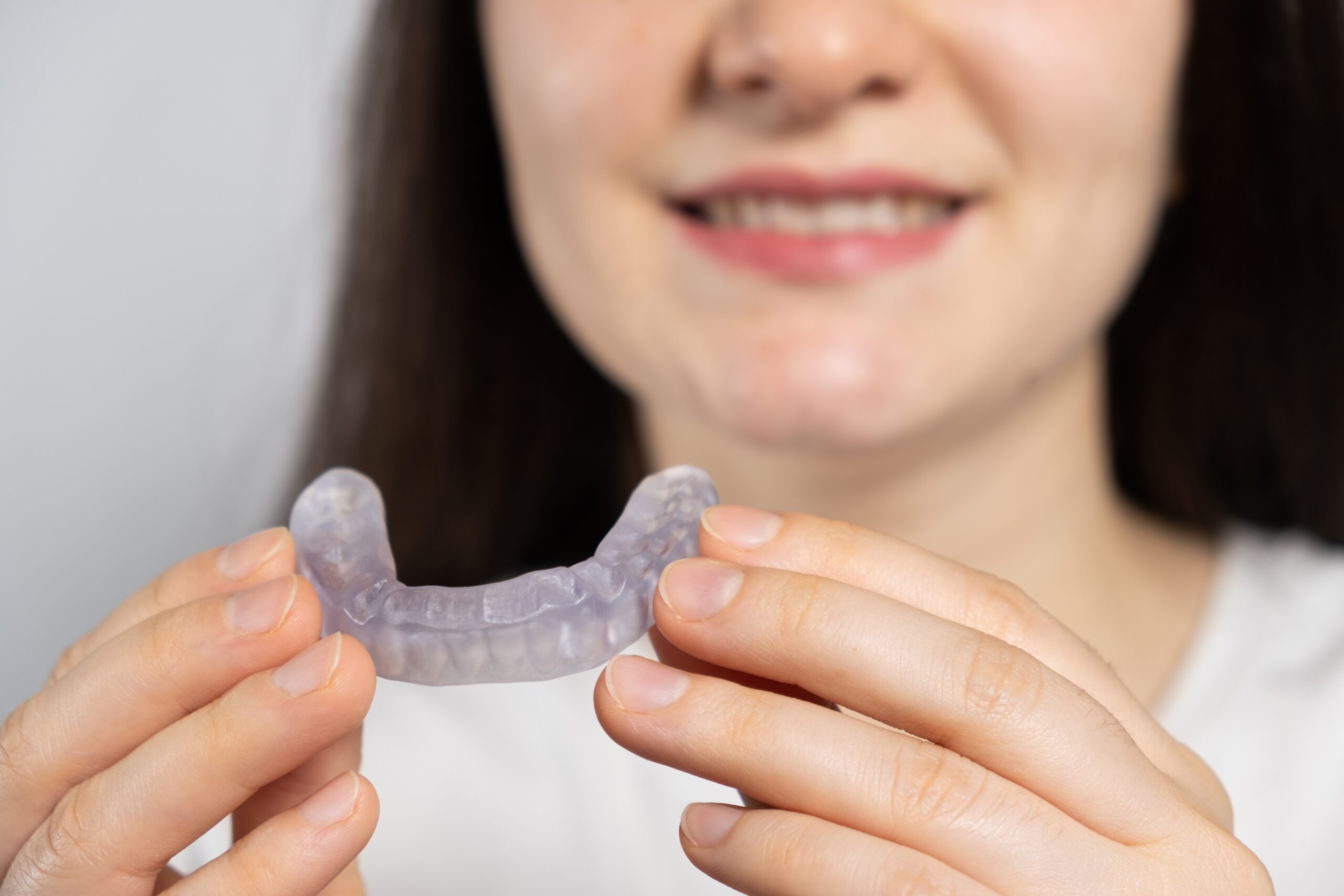
A custom nightguard is an oral appliance created specifically to fit the shape of your teeth and bite. It is typically worn while sleeping, when many patients unknowingly grind their teeth or hold their jaws tightly together.
The condition commonly associated with grinding and clenching is called bruxism. Some people grind their teeth noticeably, while others primarily clench. Both behaviors can place considerable force on the teeth, jaw joints, and surrounding muscles.
The goal of a nightguard is not simply to place a layer of material between the upper and lower teeth. Properly designed appliances help distribute biting forces more evenly and create a protective barrier that reduces direct tooth-to-tooth contact.
Because every patient’s bite is different, our team evaluates how the teeth come together before recommending an appliance. The shape, thickness, and design of the nightguard can then be selected based on your individual needs rather than relying on a one-size-fits-all solution.
Signs You May Need A Nightguard
Many people do not know that they grind or clench because the behavior occurs while they are asleep. In some cases, a spouse or family member notices grinding sounds. In others, the first evidence appears during a dental examination.
Possible signs include:
- Teeth that appear flatter, shorter, or increasingly worn.
- Small chips or fractures that occur without an obvious injury.
- Jaw tightness or fatigue after waking in the morning.
- Frequent morning headaches, particularly around the temples.
- Increased tooth sensitivity caused by gradual enamel wear.
- Tenderness in the facial or chewing muscles.
- Damage to crowns, fillings, veneers, or other dental restorations.
- Visible wear patterns where opposing teeth repeatedly contact one another.
Not every headache or sensitive tooth is caused by bruxism. That is why an evaluation is important before assuming a nightguard is the appropriate solution. Our team can examine the teeth, evaluate the bite, discuss your symptoms, and determine whether grinding or clenching appears to be contributing to the problem.

Protecting Teeth From Bruxism-Related Damage
Natural enamel is remarkably strong, but it is not designed to withstand excessive pressure night after night. Persistent grinding can slowly remove enamel from the biting surfaces of the teeth. As that protective layer becomes thinner, teeth may become more sensitive and vulnerable to cracking.
Clenching creates a different type of stress. Rather than sliding the teeth against one another, the jaws may remain tightly compressed for extended periods. This can strain chewing muscles and place concentrated pressure on individual teeth.
Patients with crowns, fillings, veneers, bridges, or implant-supported restorations may have an additional reason to consider protection. Dental restorations are designed for normal biting forces, but repeated heavy grinding can shorten their lifespan.
A custom nightguard creates separation between the upper and lower teeth so those forces are absorbed and distributed by the appliance instead. Protecting the teeth early can be far simpler than repeatedly repairing damage after it occurs.
Custom Nightguards Vs. Over-The-Counter Options
Drugstores and online retailers offer several types of nightguards, including stock appliances and boil-and-bite designs. These options can provide temporary protection in certain situations, but they cannot account for the individual shape of your teeth or the way your bite functions.
A poorly fitting appliance may feel bulky, move during sleep, or make it difficult to close the mouth comfortably. Some patients eventually stop wearing an over-the-counter guard because it interferes with sleep or simply does not feel secure.
A custom nightguard is made using detailed information about your mouth. This allows the appliance to fit closely around the teeth while minimizing unnecessary bulk.
Fit is particularly important because a nightguard only provides meaningful protection when it is worn consistently. An appliance that feels secure and comfortable is much easier to incorporate into a nightly routine.
At Bella Vista Family Dental, we also consider where wear is occurring and how your teeth contact one another. This individualized approach helps us recommend an appliance based on what your smile actually needs rather than selecting a generic shape or thickness.
What To Expect When Getting A Custom Nightguard
The process begins with an examination of your teeth, existing restorations, and bite. We will look for signs of grinding, enamel wear, fractures, and other changes that could indicate excessive pressure.
We may also ask about symptoms such as morning jaw tension, headaches, sensitivity, or previous problems with cracked teeth.
Once a nightguard is recommended, detailed impressions or digital records of your teeth are taken so your appliance can be fabricated to fit your mouth accurately. When the nightguard is ready, our team checks its fit and evaluates how your teeth come together while wearing it.
Small adjustments may be made to improve comfort or balance the bite.
When you first begin wearing the appliance, it may feel noticeable simply because your mouth is adjusting to something new. Most patients become accustomed to their nightguard with consistent use. If the appliance begins creating unusual pressure or feels uncomfortable, we encourage you to let us know rather than setting it aside.

Caring For & Cleaning Your Nightguard
Proper care helps keep your nightguard clean and extends the usable life of the appliance.
After removing it in the morning, rinse it thoroughly with cool or lukewarm water. A soft toothbrush may be used to gently clean the surfaces. Avoid very hot water, which may distort certain appliance materials and affect the fit.
Allow the nightguard to dry before storing it whenever possible. Keep it in a ventilated protective case rather than placing it loose in a drawer, countertop, or travel bag.
The storage case should also be cleaned regularly because moisture and debris can collect inside.
Bring your nightguard with you to routine dental visits. Our team can evaluate its condition, look for areas of excessive wear, and confirm that it continues to fit properly. Interestingly, wear on the nightguard itself can also provide valuable information about the amount and location of grinding pressure occurring during sleep.
Pets should be kept away from dental appliances. Nightguards often attract dogs because of their scent, and chewing damage is one of the more preventable reasons an appliance needs to be replaced.

When Should Your Nightguard Be Replaced?
There is no single replacement schedule that applies to every patient. Some nightguards last for several years, while patients who grind aggressively may wear through an appliance more quickly.
Replacement may be recommended when the nightguard develops cracks, deep grooves, thinning areas, or significant distortion. A loose appliance should also be evaluated because changes in dental work or tooth position can affect its fit.
If you receive a new crown, bridge, implant restoration, or other treatment that changes the shape of your teeth, your existing nightguard may need to be adjusted or replaced.
Do not assume that visible wear means the appliance has failed. In many cases, wear on the nightguard means it has been absorbing forces that otherwise would have been directed toward your natural teeth.
During routine visits, we can help determine whether the appliance is still functioning as intended or whether it is time for a new one.
Protect Your Smile With Bella Vista Family Dental
Grinding and clenching can be easy to overlook because much of the damage develops gradually. Identifying the pattern early allows you to protect healthy enamel, existing dental work, and the comfort of your bite before more complicated problems develop.
At Bella Vista Family Dental, we take the time to understand why a patient may be experiencing tooth wear, jaw tension, or repeated dental damage rather than simply recommending an appliance without evaluating the underlying pattern. Your nightguard should be designed around your teeth, your bite, and the way you actually use it.
If you live in Simpsonville, SC, and have noticed worn teeth, morning jaw tension, unexplained chips, or other possible signs of grinding and clenching, our team can evaluate your smile and help determine whether a custom nightguard is appropriate for you. Thoughtful prevention today can help preserve the strength, function, and appearance of your teeth for years to come.